
In many ways, buying a block of land is as exciting as constructing a new home. It can provide you with a clean slate to design your dream project. This is one of the most important decisions you will make in your lifetime, making it vital to understand all the different factors. These should include how location factors into your final price, the different terrains to watch out for and any legal constraints.
In our guide, we’ll break down the different financing options available to give you a head start, such as any government grants and subsidies. We will also unpack the differences between city and country living before guiding you step by step on how to buy land in Victoria.
How to Choose a Block of Land
Consider the following factors, which can help you choose the right block of land with confidence:
Location
Nailing the right location is a crucial decision for both lifestyle and your return on investment. The perfect location will depend on a variety of factors, such as your budget, links to transport, and proximity to schools, work and amenities. Also consider whether you prefer a noisy, urban environment or a quiet, regional setting.
It is vital to also think about the long-term value of your property. Analyse the potential market growth in your chosen locations to assess the appreciation of your block over time, ensuring you can get value for your purchase.
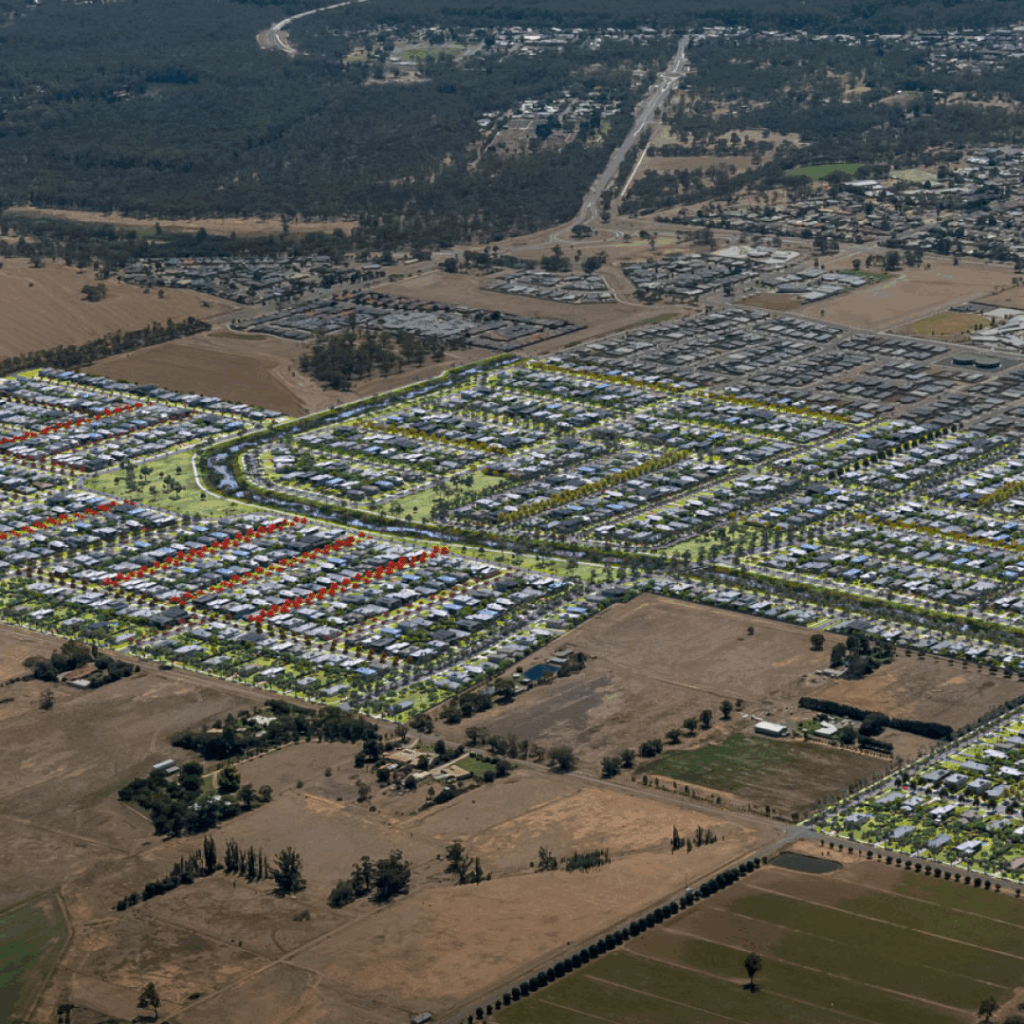
Yallarah, a vibrant master-planned community near Echuca, offers the perfect blend for both investors and owner-occupiers. New families can benefit from a relaxed, country atmosphere with quality schools and transportation links to build a life around. While investors have the opportunity to buy land or house and land, with affordable land prices and generous block sizes. Contact here for more information.
Size of the Block
If you plan on building a home, it will be important to ensure your new purchase is the right size. This will dictate what kind of home you can build and how much space you’ll have leftover. If you choose a small block, this may limit your new home build, but will usually cost less than a larger block.
Consider the plans for your block when deciding on the right size. Are you only planning on building a home, or are you looking to build a larger commercial space or possibly even a creative space, such as a garden? Understanding the intentions for your block can allow you to choose the perfect size.
Consider Block Orientation
If you plan to construct a home, helps to consider the direction your new property will face. Ideally, you will want to look for a block that allows your home to be north-facing, which will maximise the amount of sunlight during winter and minimise sunlight during the summer. This orientation is highly sought after, allowing you to be naturally warmer in the winter and cooler in summer, saving you on unnecessary energy costs. Vacant blocks that do not allow for a north-facing aspect may have less access to direct sunlight during the day, and require more heating and cooling.
Legal Considerations
When purchasing land, consider all the legal factors such as zoning, titles, land restrictions and building covenants that restrict certain building materials. Ensure you check your area’s zone and the specific rules that are unique to your property. These can change from one council to the next, and may restrict the height, bulk and style of any construction. Also, determine whether your land is titled or untitled. Titled land means your property has clear, legal ownership, which means it’s ready for a new build.
Flood and Bushfire Risk
Part of living in Victoria is managing the impacts of our unique climate. Flood and bushfire risks are both serious matters to address when purchasing property. Typically, properties in areas that are prone to bushfires come with added risk, stricter building regulations and higher insurance costs. When it comes to building a home, your building will have to adhere to specific construction standards, such as fireproof materials.
Susceptibility to flooding or fires can be found on sites like Vic Emergency or the Country Fire Authority (CFA). By determining whether your land is in a climate-risk area, you can work out the type of house you can build, the insulation you’ll need, and how to prepare for specific weather conditions.
Utility Services on Land
Determine what utility services, such as water, electricity and sewerage, are available for your block. In most developed parts of Australia, blocks of land may already have access to essential services. However, if you are choosing to buy in more remote areas, this may not be as readily available. Significant investment may be required to get you connected to all the main services. For instance, you may plan to buy a block in a regional area without connection to the town sewerage system, which will require a septic tank to be installed. Your new block may also not be connected to a water supply, with alternative solutions needed, such as building an external tank.
Land Slope
A sloping block can be a tricky proposition. Although this has the potential for constructing a more unique home with a nice view, it can be tricky to build around and may end up costing more. This is due to the need for the construction being more complex, often requiring extensive landscaping, with retaining walls and specialised foundations. Typically, the steeper the slope, the more expensive the project.
Quality of the Soil
Depending upon where your land is located, you may have to carry out soil tests that check the quality and type of your soil. Established land developments will usually have soil classification already done; however, if you plan to buy in an unestablished area, you must do a soil test. These tests can reveal the stability of your property’s ground and its load-bearing capacity. Ideally, the soil classification should be ‘M,’ which means it is stable and ideal for house construction. Unwanted soil class is ‘E’, ‘H’ or ‘P ’, which can be very costly to stabilise. These tests are particularly useful if you are planning to build a house, helping you avoid any unnecessary construction delays.

Financing Options When Buying a Block of Land
When buying a block of land, you will need to be across the financing options available to you. If you are unsure about the option for you, consult with experts such as a buyer’s advocate or finance broker. They can provide valuable market insights while understanding your finances and land purchase goals.
Calculate costs
Prior to addressing any financial options, it’s important to determine the total cost for land. This can vary widely depending upon your location and the size of your block. Make sure you include costs for site evaluations, such as soil tests or surveys, as well as stamp duty, which is the tax you have to pay when transferring land ownership. Should also include if you’re planning for any subsequent construction. By understanding the total costs of your land purchase, you can budget for the right financing option for you.
Vacant Land Loan
When purchasing just a piece of land, your main financing option will be a land loan. This is designed just for purchasing land, to eventually build a home on it later on. This provides great flexibility to help you secure a location before starting construction. The loan works like a typical mortgage, where you’ll borrow a set amount from a lender to fund your purchase, which you’ll repay with interest over a set period.
Although it is usually more difficult to get a vacant land loan compared to a home mortgage or construction loan. This is because, from a lender’s point of view, land loans are riskier. After all, the price of vacant land is more prone to fluctuation than an existing property. Empty land can also be harder to sell than a built house.
Other financing options
Once you begin building a new home, your land loan can be combined with a construction loan to cover both the land purchase and building costs. When you take out a construction loan, your lender approves the amount your construction will cost. These loans will be released in stages as your construction progresses and you pay the builder.
You may also be able to buy a vacant block of land with a personal loan. Typically, these loans have faster application processes than land or construction loans, so if you are looking to buy land quickly, this could be a viable option. However, these are not the preferred option, because they come with higher interest rates and shorter repayment periods. This means you could be left with significantly higher monthly payments than other loan options. These loans are also more commonly issued for specific reasons, such as renovations or travel, and there’s no guarantee your lender will approve your application for purchasing land.
City vs Regional Land
One of the biggest decisions you will make in your journey into land ownership is deciding between purchasing in the city or in regional Victoria. Choosing to buy land in Melbourne is attractive for many because it provides you with greater access to public services and transport, with more amenity options in a diverse job market. With a growing population and access to universities, rental demands are high in Melbourne, which may make them attractive to prospective landlords.
However, the country also has a plethora of unique benefits. Firstly, if you are working on a budget, regional towns and regions will usually have a much lower cost of living. Not only for land and housing, but also for daily expenses. You can also get much more land for your money, with people living in more spacious properties than their city counterparts. This also extends to the streets and shops, which are far less crowded, giving you room to breathe.
The environmental benefits of the country also speak for themselves. With fewer cars, means less pollution, with access to cleaner air. You are also surrounded by nature, with plenty of untouched environments with trees, wide open fields and untouched fields. This helps to lower your stress levels, getting you away from the city hustle and bustle. The country is also a great place to raise your family, within a tight-knit community where residents are more likely to look out for one another. Yallarah is a master-planned community with a range of land, and house and land packages in Echuca.

How to Buy Land in Victoria
Once you’ve made the decision to buy your first block and you’ve found the ideal location you may be wondering about the next steps. Typically, the process of buying land in Victoria will involve the following steps:
- Calculate costs and budget – Understand the amount of money you can borrow from the bank by organising pre-approval. Receiving a pre-approval means a lender has conditionally agreed to lend you an amount of money towards purchasing land. Although it doesn’t guarantee you a final loan, it can allow you to develop a clear budget, with an estimate of your borrowing power.
- Make the offer – Officially submit your offer to purchase. This will be carried out either directly to the seller or through their agent.
- Review and sign contract of sale – Your contract is the written agreement that includes all terms and conditions. Includes the agreed price, settlement period and any special conditions. Typically, your contract will be either a conditional offer, which is dependent on specific conditions being met. Or it’s an unconditional offer where the buyer is fully committed with no added conditions. To weed out any hidden fees or restrictions, we recommend organising for a solicitor or conveyancer to thoroughly examine all aspects of your contract before signing.
- Exchange contracts – Exchanging contracts essentially refers to the step where both the buyer and seller swap signed versions of the contract. This makes your land purchase legally binding, meaning you cannot pull out of this phase without facing financial penalties. Making your new acquisition legally officially, and committing the sellers to your purchase.
- Pay deposit – Once contracts are exchanged, you will move into paying a deposit. Typically, a 10% deposit will be enough to secure the land, which will be held in a trust account, until all settlement is finalised. There is also a new Home Guarantee Scheme, launching on October 1, 2025, will allow eligible first-home buyers to purchase a property with a deposit as low as 5%.
- Finalise loan arrangements – Ensure that all of your mortgage documents and payment arrangements are organised prior to settlement. Importantly, this should include arranging for payment of stamp duty, which is the fee you pay when transferring land from one owner to another. For assistance in preparing for your new mortgage, contact your mortgage broker or financial advisor.
- Organise insurance – It’s vital to have all your insurance organised prior to settlement. This should include arranging Vacant Land Liability insurance. This is an important step, as once you purchase property, you become legally responsible for what happens on the land. Insurance can protect you from costly lawsuits by covering claims and damages if someone gets injured on your land.
- Pay the balance and take ownership – You are now nearing the final stages. The settlement phase is where you make a payment of the remaining balance left after your deposit. Your exact settlement period will depend upon the terms of your contract, but will likely be approximately 6 weeks.
- Register land titles – The final step in the land ownership process. Your land will be approved by the Registrar of Titles, which registers your land into the official record of ownership. Once you pass this step, this secures your official ownership of land.
When you buy a block of land, you are investing in the future. At Yallarah, we understand that this can be a daunting thought for many, which is why we have crafted this guide for Victorians. We have explained exactly what to look out for when choosing the right piece of land, including location, block size and legal constraints. Financing is a key hurdle to overcome when making a land purchase decision. It is important that you recognise these costs and make yourself aware of the different mortgage options and government subsidies available to you.
There is also the big question of where to buy land. At Yallarah, we recommend investing in regional land. Not only are you investing in areas with proven market growth, but you can also benefit from affordability, with more space and less stress. Contact the experts at Yallarah, who are ready to find the perfect block of land for you.